Get expert assistance, technical documentation, product selection guidance, and engineering support for your motion control applications.
From initial feasibility study and CAD integration to field commissioning and fault troubleshooting, our senior application engineers are dedicated to accelerating your development cycles and ensuring continuous operational performance.
We deliver end-to-end engineering assistance across every phase of your motion control lifecycle. Our expert support team bridges the gap between hardware specification and full-scale deployment:
Navigating complex motion control specifications requires precise calculation and application expertise. Our dedicated engineering specialists help you select and size the optimal components tailored to your exact dynamic load, speed, duty cycle, and space envelope requirements:


Every industrial motion setup presents unique mechanical, electrical, and control architecture challenges. Our application engineering team collaborates directly with your R&D department:
Minimize machine downtime and guarantee zero-defect startup with rapid response technical troubleshooting from our field engineers:

Access our centralized digital library to streamline your design, integration, and procurement workflows. All technical documentation and 3D design files are available for instant download:

Detailed electrical specs, torque-speed performance curves, pinout wiring diagrams, environmental ratings, and mechanical tolerance sheets for every individual part number.

Comprehensive product selection guides, full line specification summaries, order coding tables, and product family comparison matrices.
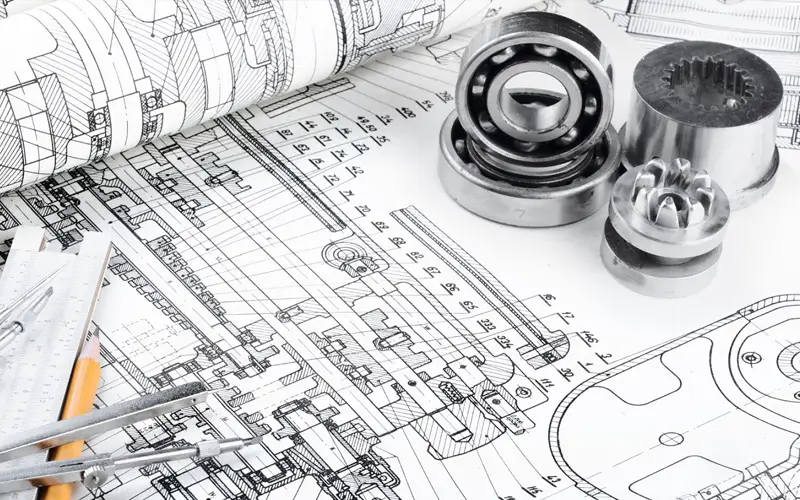
Directly downloadable STEP, IGES, SolidWorks 3D models, and 2D DXF/DWG mechanical dimension drawings for instant import into your CAD assembly designs.

Complete hardware installation manuals, software tuning guides, fieldbus communication handbooks (EtherCAT, CANopen), and safety operational protocols.
Find quick, engineering-verified answers to common technical queries regarding motion control selection, tuning, and customization:
Selecting a servo drive requires matching four critical parameters: 1) Peak and Continuous Current requirements of your motor; 2) DC Bus Voltage availability (e.g., 24V-48V Low Voltage DC for robotics or 220V/380V AC for heavy industrial systems); 3) Communication Fieldbus (EtherCAT, CANopen, Modbus TCP, RS485); and 4) Control Mode (Position, Velocity, Torque, or Cyclic Synchronous Position CSP). Utilize our sizing calculator or consult our engineers to verify thermal headroom.
Choosing the right encoder depends on resolution, environment, and physical constraints:
1、Type (Incremental for basic velocity feedback vs. Absolute Multi‑turn for zero‑homing startup);
2、Technology (Optical encoders excel at high‑precision measurement and support both single‑turn and multi‑turn absolute output, well‑suited for performance‑critical motion systems; inductive encoders shine in harsh operating conditions with strong resistance to shock, vibration, dust and oil contamination. Their compact hollow‑capable mechanical structure makes them preferable for space‑constrained installations);
3、Resolution (Optical encoders achieve high resolution up to 22‑bit for single‑turn and 16‑bit for multi‑turn counting; inductive encoders deliver absolute‑position accuracy of ±0.006°, resolution ranges from 14‑bit to 21‑bit based on positioning tolerance);
4、Interface protocol (Optical encoders support Modbus, CANopen, SSI, BiSS-C and Endat 2.2; inductive encoders adopt standard protocols including BiSS‑C, SSI and RS485).
Motor-drive matching involves verifying that the drive can deliver the motor’s rated and peak current without clipping or thermal tripping, matching the feedback encoder protocol to the drive’s input hardware, ensuring the drive voltage aligns with the motor’s back-EMF constant, and keeping the load-to-motor inertia ratio within recommended stable limits (ideally below 10:1 for standard dynamic systems).
We provide full OEM engineering customization, including custom mechanical shaft keyways and hollow shaft diameters, specialized IP68/C5-M marine anti-corrosion coatings, custom stator windings for specific DC/AC voltage buses, integrated temperature sensors (PT100/NTC), custom wire harness lengths and connectors, as well as tailored drive firmware for proprietary communication protocols.